Satirical Books About Money, Status, and Consumption
Financial books promise control: more wealth, better decisions, and a manageable future. Satire reverses that promise. It shows how often buying is tied to ego, comparison, and the need to prove something.
The short version
Strong money satire does not hide real financial advice inside jokes. It exaggerates status rituals, success language, and consumer choices until readers recognize their own behavior. The physical book can become part of the argument when price, blank space, or luxury presentation deliberately plays with value.
Why financial language is ideal for satire
Financial communication often relies on certainty, metrics, and personal optimization. Complex risks become simple steps. Satire borrows that form and fills it with useless objectives, questionable certificates, or achievements that exist only because a page declares them official.
The humor is not merely exaggeration. It works because many readers recognize the desire to appear smarter, more successful, or wealthier. A satirical book can expose that desire without turning one group of buyers into a moral target.
The purchase becomes part of the joke
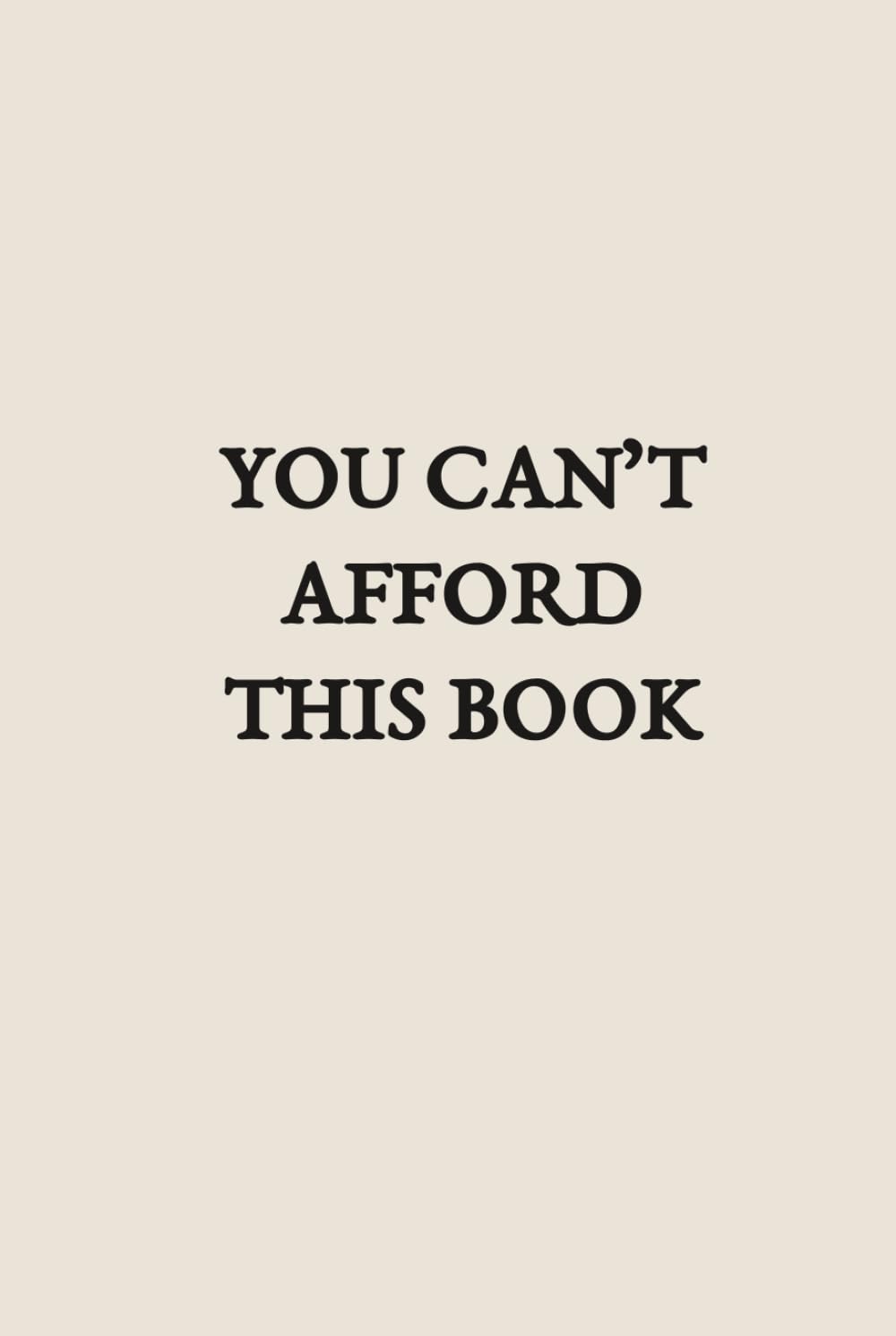
A novel normally locates its value in the story. A satirical object-book can also play with its own existence. Buying a title called You can’t afford this book appears to disprove it while simultaneously confirming that a provocation triggered the purchase.
That self-reference separates the concept from a loose collection of money jokes. Cover, hardcover format, empty space, and invented achievements all participate in the premise. The physical edition is not merely a container for humor; it becomes evidence.
Empty space can carry meaning
In an information book, blank area may look wasteful. In satire, it can represent luxury, absence of substance, or conspicuous waste. The important question is whether design follows a recognizable idea rather than merely inflating page count.
Blank or nearly blank pages also create timing. Like a pause in conversation, they let the previous line settle and make the next questionable achievement more absurd.
Who enjoys this kind of humor?
Dry satire needs readers comfortable with contradiction and understatement. Anyone expecting actionable saving advice or a continuous narrative would be choosing the wrong book. Product copy should therefore say clearly what the object is not.
As a gift, it suits people who question status symbols while still enjoying well-designed objects. The title may provoke the recipient, but the joke should invite them in rather than belittle them.
Books that fit this topic
The English-language hardcover makes money, status, and the buyer’s own impulse the subject of its satire.
You can't afford this book
A dry, self-aware hardcover satire about money, status, ego, impulse purchases, and taking a book title personally.
Common questions
Does the book contain real financial advice?
No. It is a satirical gift book and explicitly not a finance or investment guide.
Why is it a hardcover?
The premium-looking format strengthens the contradiction between status object, unnecessary purchase, and satirical content.
Is a German edition available?
The printed edition is in English; the German website explains its concept, tone, and intended audience.
More articles
Western Noir and Weird Western: When the Old West Turns Unsettling
Learn how western noir and weird western reshape the Old West through mystery, conflicting witnesses, moral ambiguity, and quiet horror.
Read the article →Illustrated Short Stories: A Complete Book for One Evening
Learn why compact illustrated fiction can deliver a complete reading experience and what to check about length, artwork, and resolution.
Read the article →