Coffee-Table Books for Engineers, Designers, and Curious Adults
A coffee-table book may be visually attractive, but it should offer more than decoration. For engineering and design readers, lasting value comes from large, legible images, accessible explanations, and sources that reward repeated browsing.
The short version
Strong engineering coffee-table books combine generous visual material with concise standalone text, clear sourcing, and useful thematic organization. They should work during a quick browse and a focused reading session, without requiring specialist training.
Visual quality means legibility
Large does not automatically mean useful. Technical drawings need contrast, adequate margins, and reproduction that preserves lines and reference numbers. A dramatic crop may look attractive while making the actual mechanism impossible to follow.
Page design is therefore part of the content. Image and explanation should complement one another without competing for attention. A consistent spread lets readers move easily between discovery and close reading.
Short text must stand on its own
Coffee-table books are rarely read in strict order. Each entry should form a small complete unit: problem, idea, mechanism, and historical context. Technical vocabulary belongs only where it genuinely clarifies the design.
Sources do more than establish credibility. They give curious readers a next step. Patent numbers, dates, and inventor names turn a visual volume into a gateway for further exploration.
Why hardcover and trim size matter
A book intended to remain open on a table and survive repeated browsing benefits from a stable cover and generous format. It must still be comfortable to handle. Weight, binding, and paper influence whether the object is actually used or only displayed cautiously.
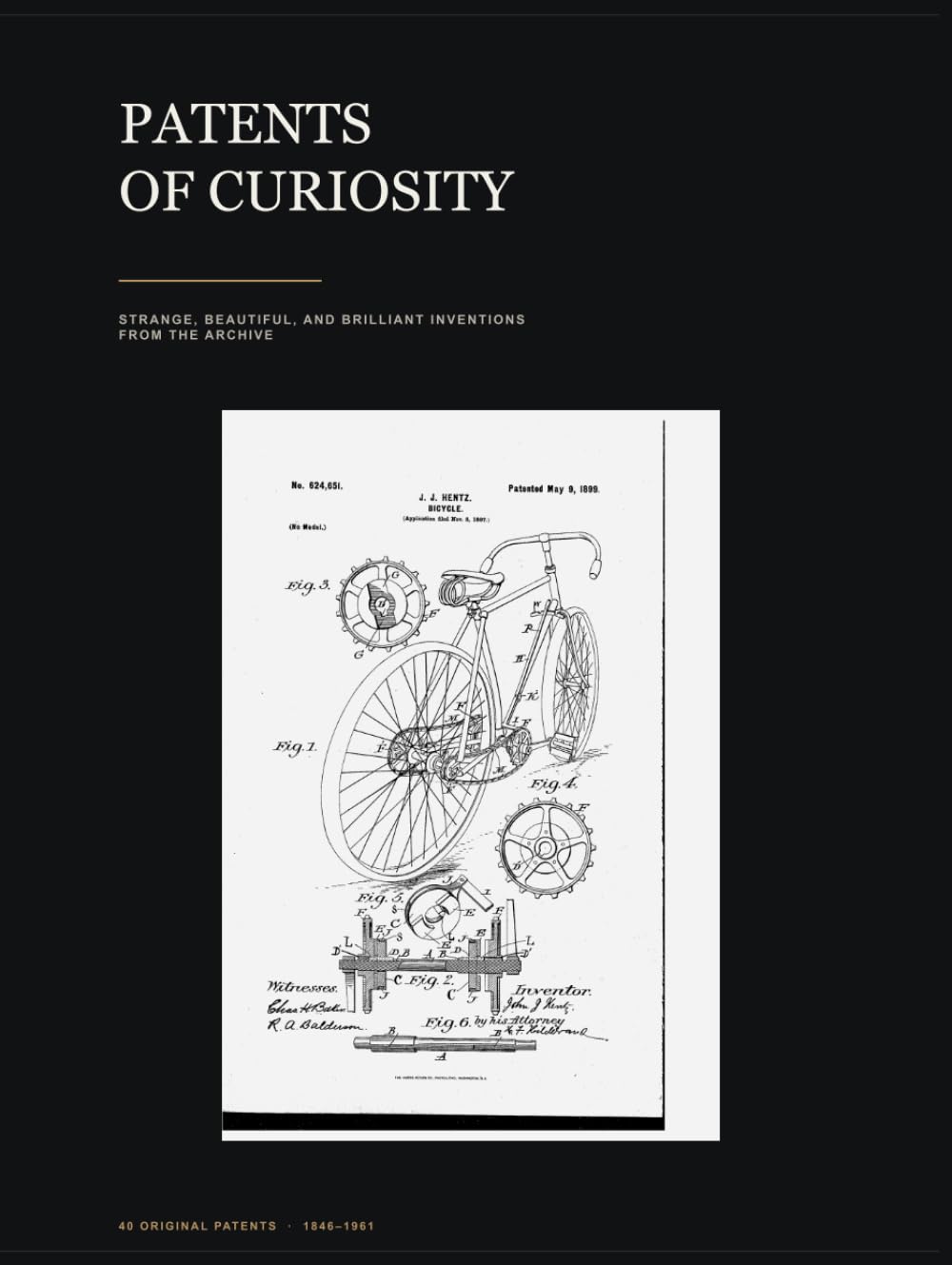
Patents of Curiosity uses one hundred large-format hardcover pages. Every invention receives room for at least one complete drawing sheet and an explanation on the facing page. The repeated structure creates orientation across subjects ranging from domestic life to transport.
Choosing the right gift
A job title is not enough. Some engineers care about historical mechanisms, while others prefer aviation, architecture, electronics, or visual systems. A strong gift states its emphasis clearly and remains approachable beyond the profession.
Historical patents work especially well because they connect mechanics, culture, and everyday history. The volume can begin conversations before the recipient has read every entry.
Books that fit this topic
This hardcover is designed for repeated browsing, technical curiosity, and conversations about unusual solutions.
Patents of Curiosity: Strange, Beautiful, and Brilliant Inventions from the Archive
A 100-page engineering coffee-table book exploring 40 strange, beautiful, and brilliant historical U.S. patents.
Common questions
What is a coffee-table book?
It is a visually oriented, often large-format book intended for browsing and display, while the best examples still offer substantial content.
Are engineering art books only for specialists?
No. Strong explanations make mechanisms accessible to interested readers without formal training.
What should I check before buying one as a gift?
Consider subject, image quality, clarity, physical format, and whether sources support further exploration.
More articles

Western Noir and Weird Western: When the Old West Turns Unsettling
Learn how western noir and weird western reshape the Old West through mystery, conflicting witnesses, moral ambiguity, and quiet horror.
Read the article →Illustrated Short Stories: A Complete Book for One Evening
Learn why compact illustrated fiction can deliver a complete reading experience and what to check about length, artwork, and resolution.
Read the article →